
Identify before testing
Operators place completed motors in the dedicated fixture and scan the code on each unit. The scan creates the identity reference used by the following test and record-handling stages.
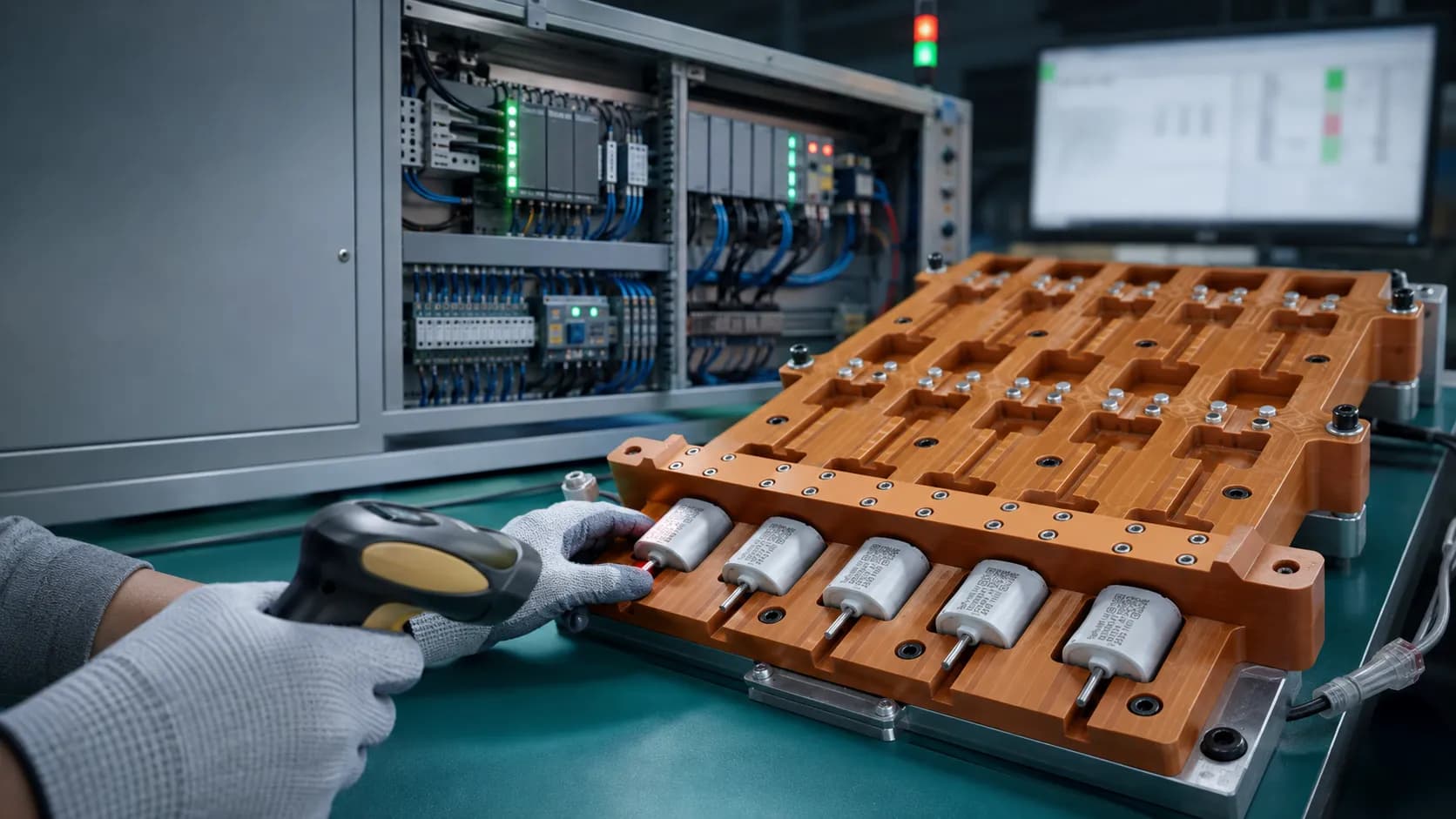
An automated test and data-handling system links each automotive seat motor to its scanned identity, acquires test data through PLC control, stores the complete record locally and sends the final result to the customer’s MES.
Production requirement
The customer needed more than a stand-alone test action. Identification, controlled testing, data capture, local retention and MES reporting had to work as one continuous production record, while the confidential internal test sequence remained protected.
Operators place completed motors in the dedicated fixture and scan the code on each unit. The scan creates the identity reference used by the following test and record-handling stages.
After the identifiers are recorded, the station runs the defined test sequence for every motor. The sequence itself is confidential; the system boundary described here begins with the scan and ends with the recorded outcome.
Measured values, including temperature and current data, are retained on the local server. The upper-level computer also prepares the performance result for transfer to the customer’s central MES.
Fixture and identification
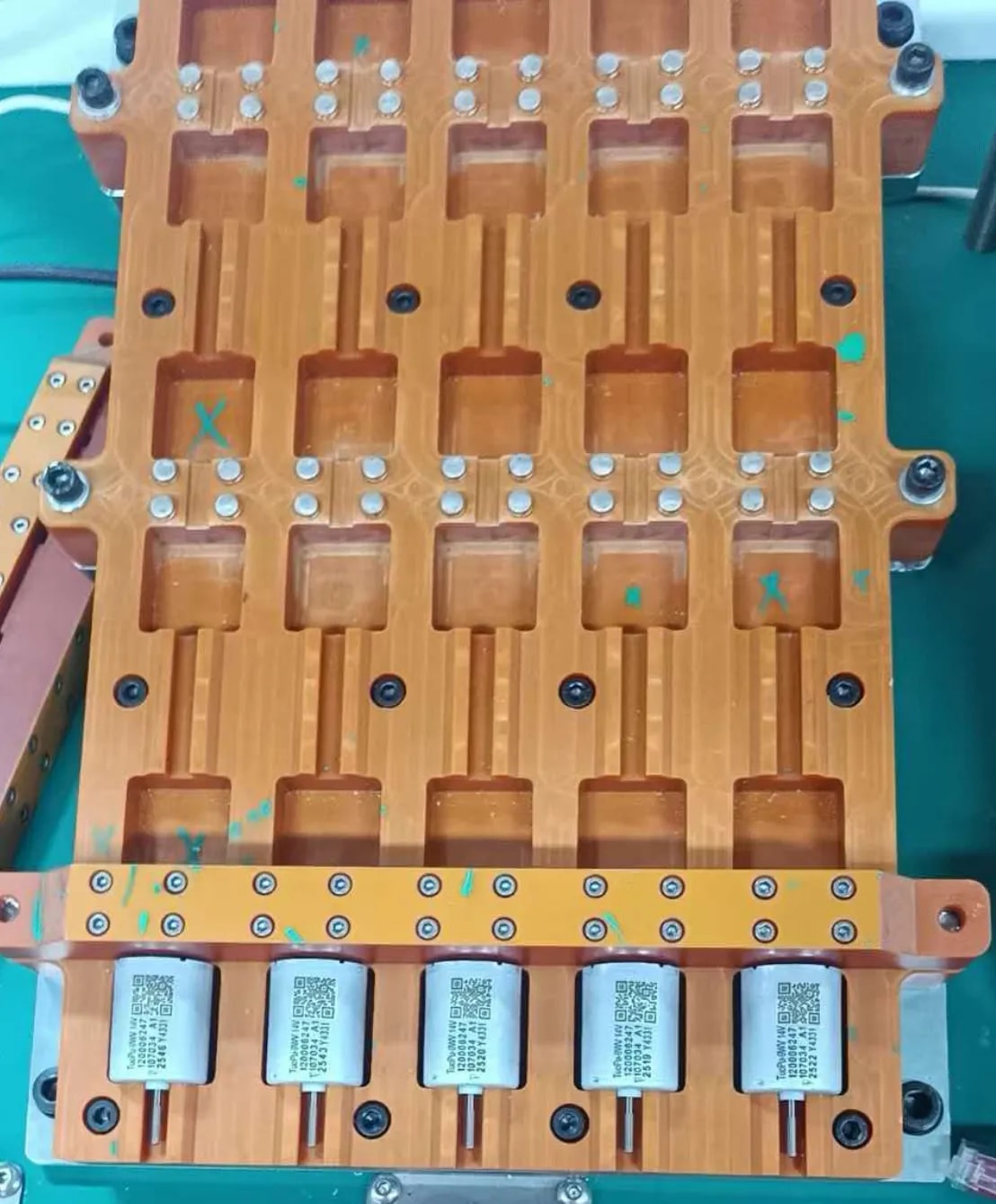
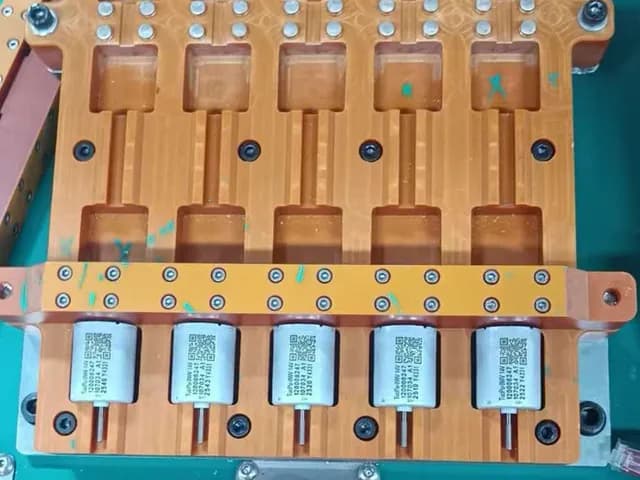
The dedicated fixture gives operators a repeatable place to load the finished motors. Each motor carries its own machine-readable code, so the station can associate the physical unit with the test record before the confidential test process begins.
Data path
Read this strip as the project’s main operating line: a motor enters the fixture, receives a scanned identity, completes the confidential test, passes through PLC acquisition and local classification, and leaves the station with a result ready for the customer’s MES.
 LoadScan
 Test
Test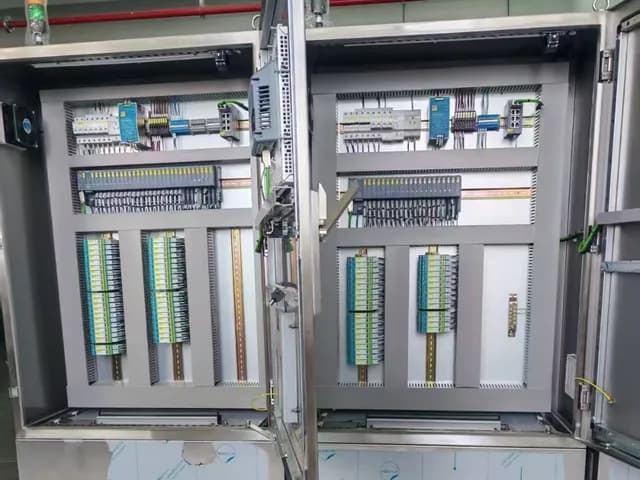 Acquire
 Store and classify
Engineered system
Each layer has a specific responsibility. The fixture holds the product, the PLC cabinet collects and exchanges field data, the upper-level application organizes the test workflow, and the record interface makes completed results searchable.
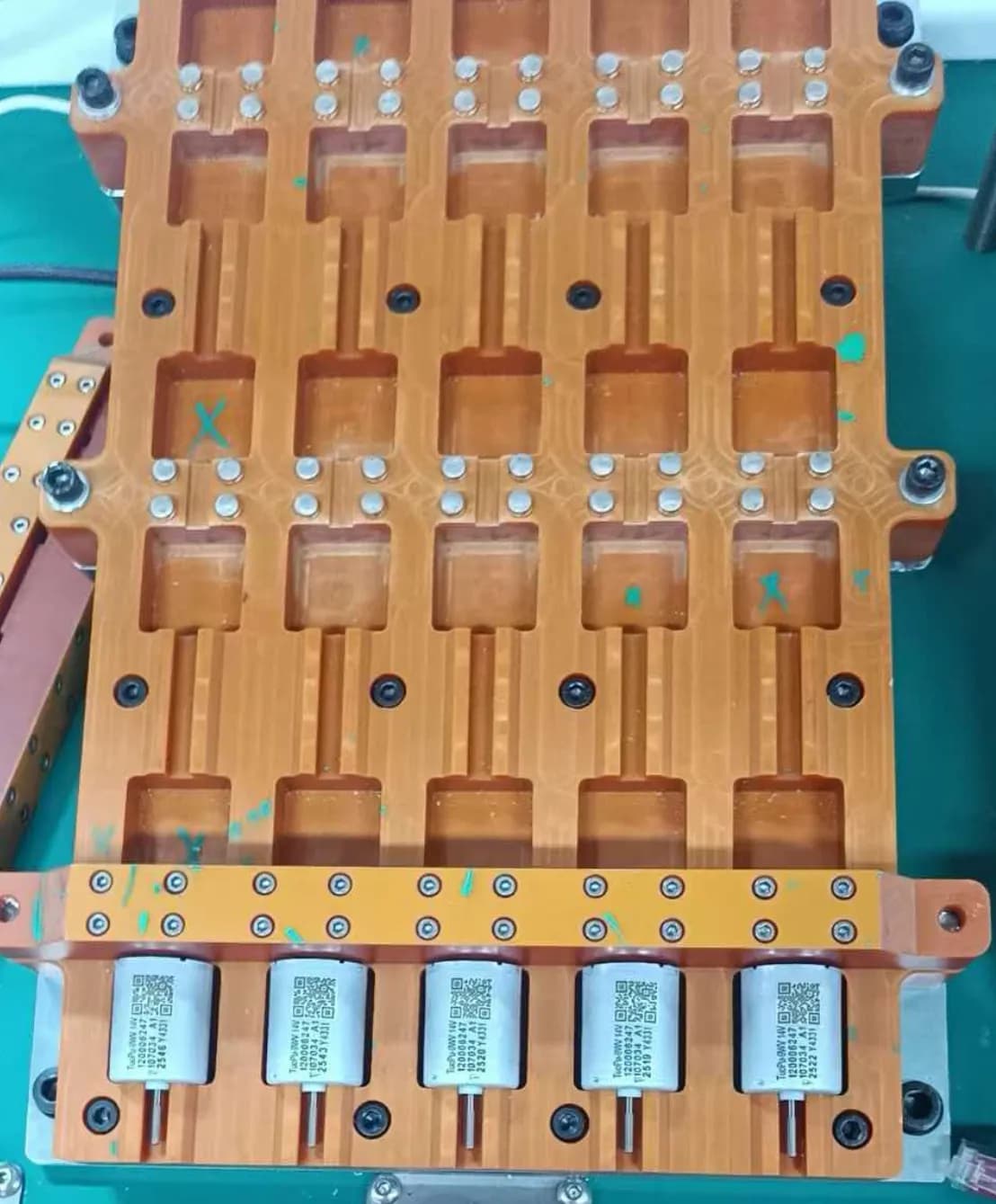
The fixture establishes the physical test position, while the scanned motor code establishes the digital identity that follows the result.
The PLC cabinet gathers data from each motor test and maintains real-time communication with the upper-level computer.
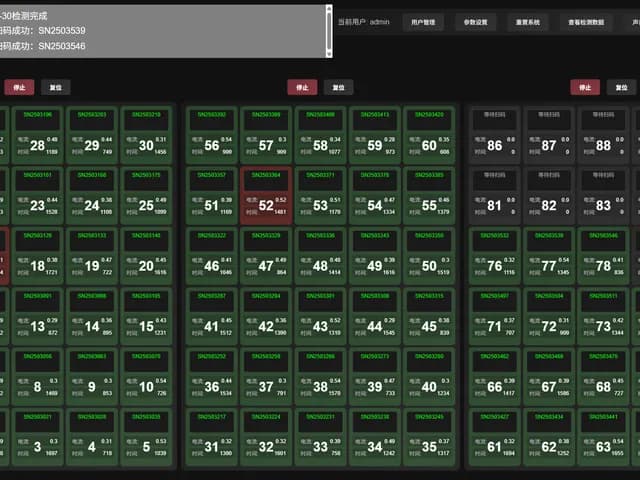
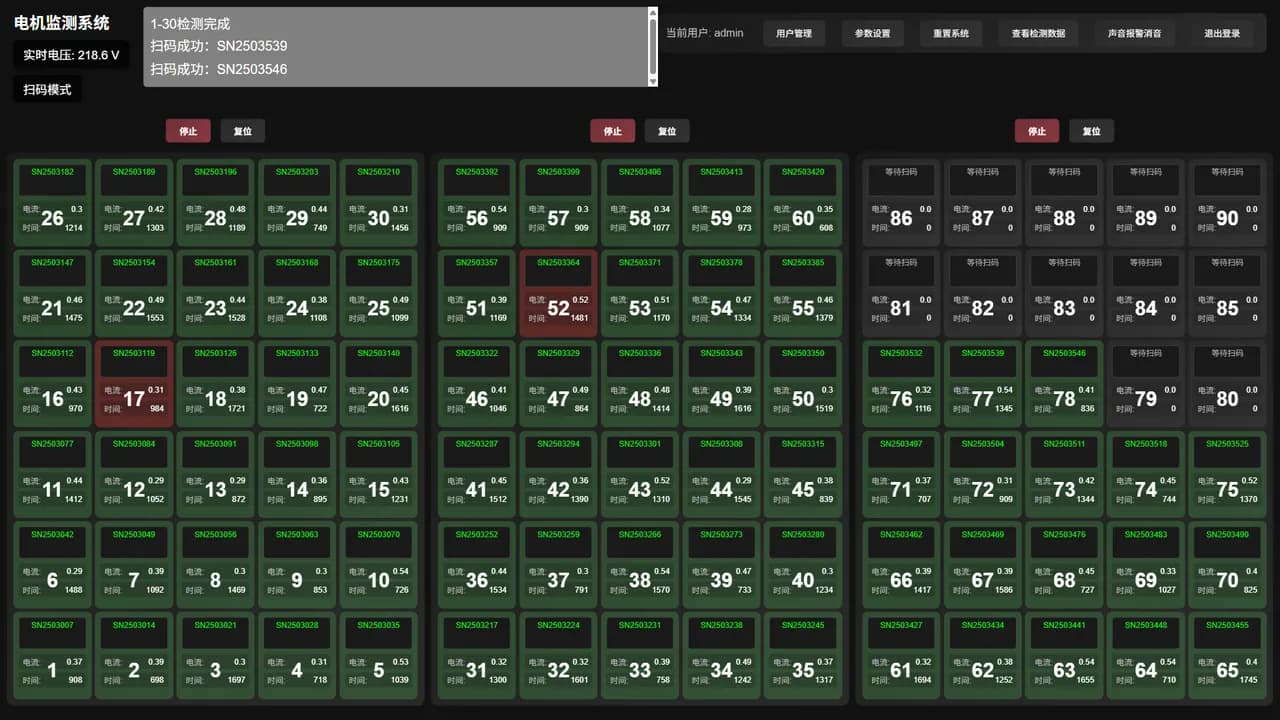
The station interface brings scanned identities, current test status and the final classification into one operational view for the production team.
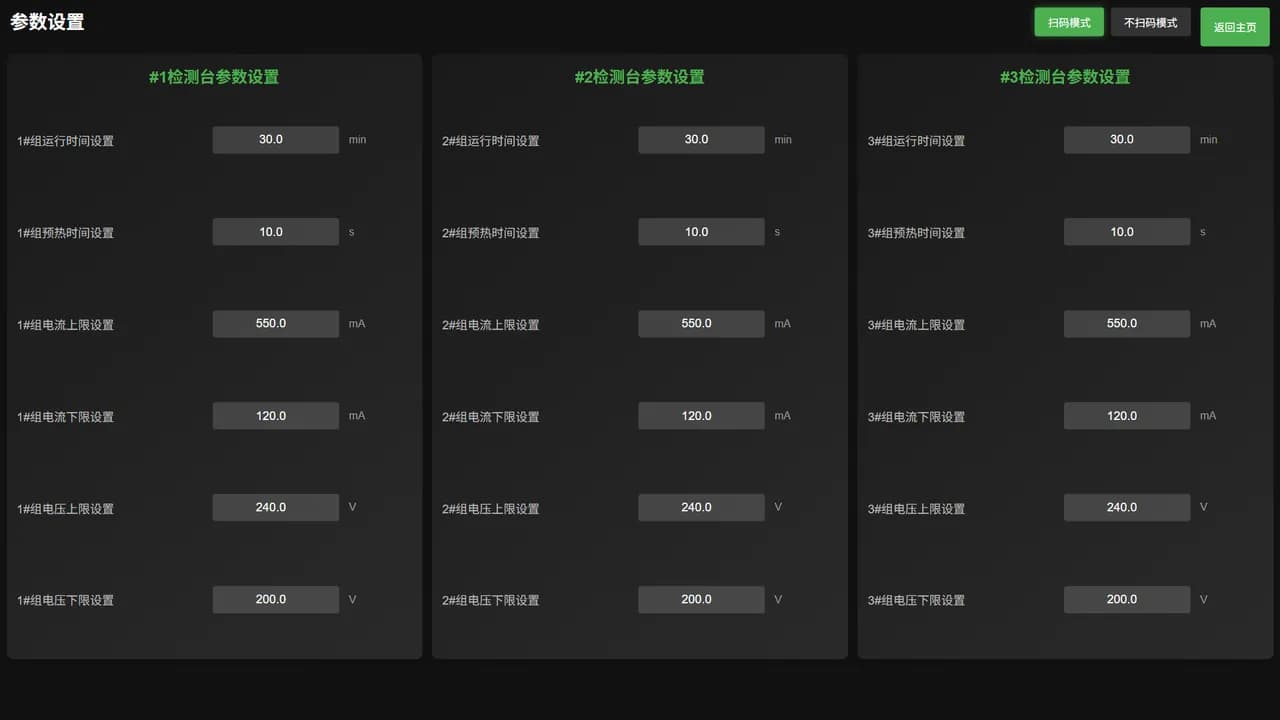
The supplied interface shows that operating parameters are organized by test station, keeping configuration separate from the operator’s live monitoring view.
Test outcome
The supplied materials document the result structure and data route, but do not include a signed performance report. This case therefore presents the recorded fields and pass-or-fail handling without publishing rates, throughput claims or inferred accuracy figures.
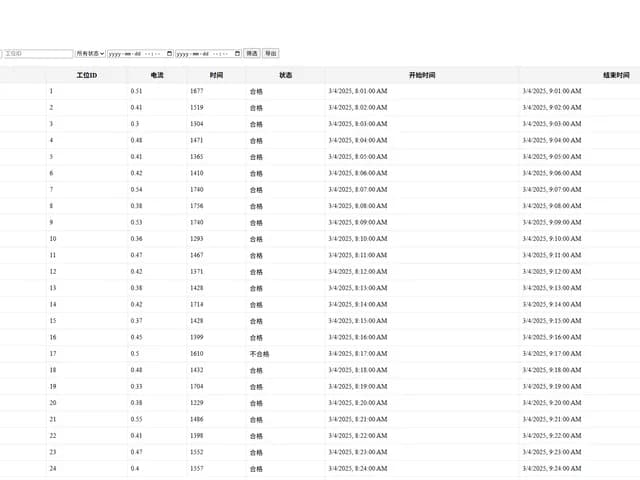
The motor identifier remains the reference for the station display, stored test data and later record search.
The monitoring screen distinguishes qualified and unqualified products with green and red status backgrounds.
Temperature, current and other motor data are stored on the local server, while the upper-level computer sends performance results to the customer’s MES.
The confidential internal test sequence is intentionally omitted. No percentage, cycle-time improvement or certification claim is made because none was supplied with a supporting report or certificate.
Record access
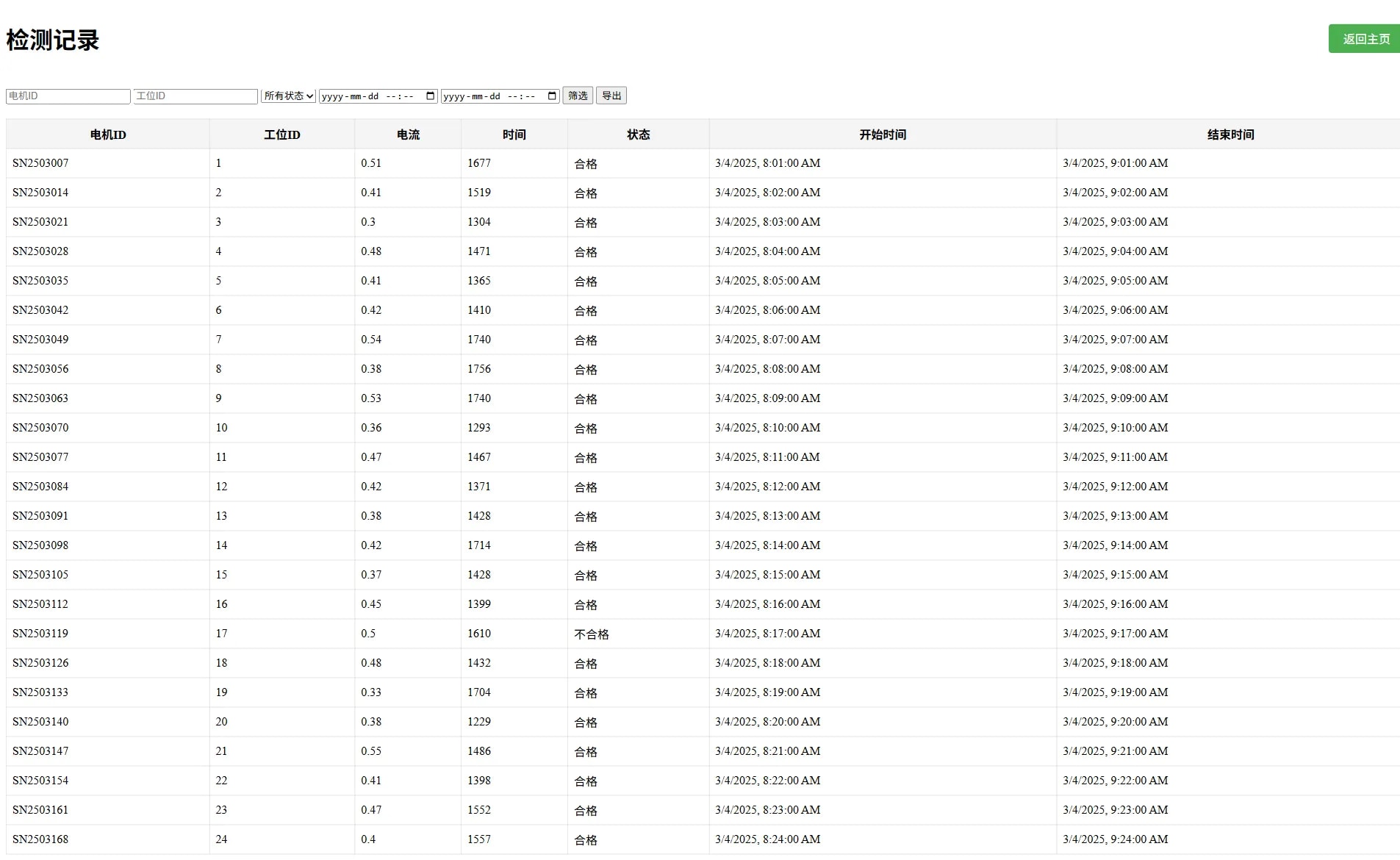
The supplied record view organizes completed tests by motor identity, workstation, measured values, status and time. Search controls support review by identity, station, result state and date range, while export makes the selected records available for downstream use.
Project outcome
For the production team, the result is a clearer chain of responsibility. Operators load and scan the product; the test station executes the defined process; the PLC control cabinet acquires and exchanges field data; the upper-level computer stores, classifies and presents the outcome; and the customer’s MES receives the performance result for the wider manufacturing record. Detailed temperature, current and related data remain available on the local server. Qualified and unqualified outcomes are visible at the station, and completed records can be searched by the identifiers and production fields shown in the supplied interface. The confidential test content stays outside the public case, while the data architecture and traceability value remain clear.
A motor leaves the station with more than a verdict: it leaves with a record the production system can use.