
Presence is not identity
A sensing trigger can report activity or occupancy, but it cannot reliably tell a cow from a person.
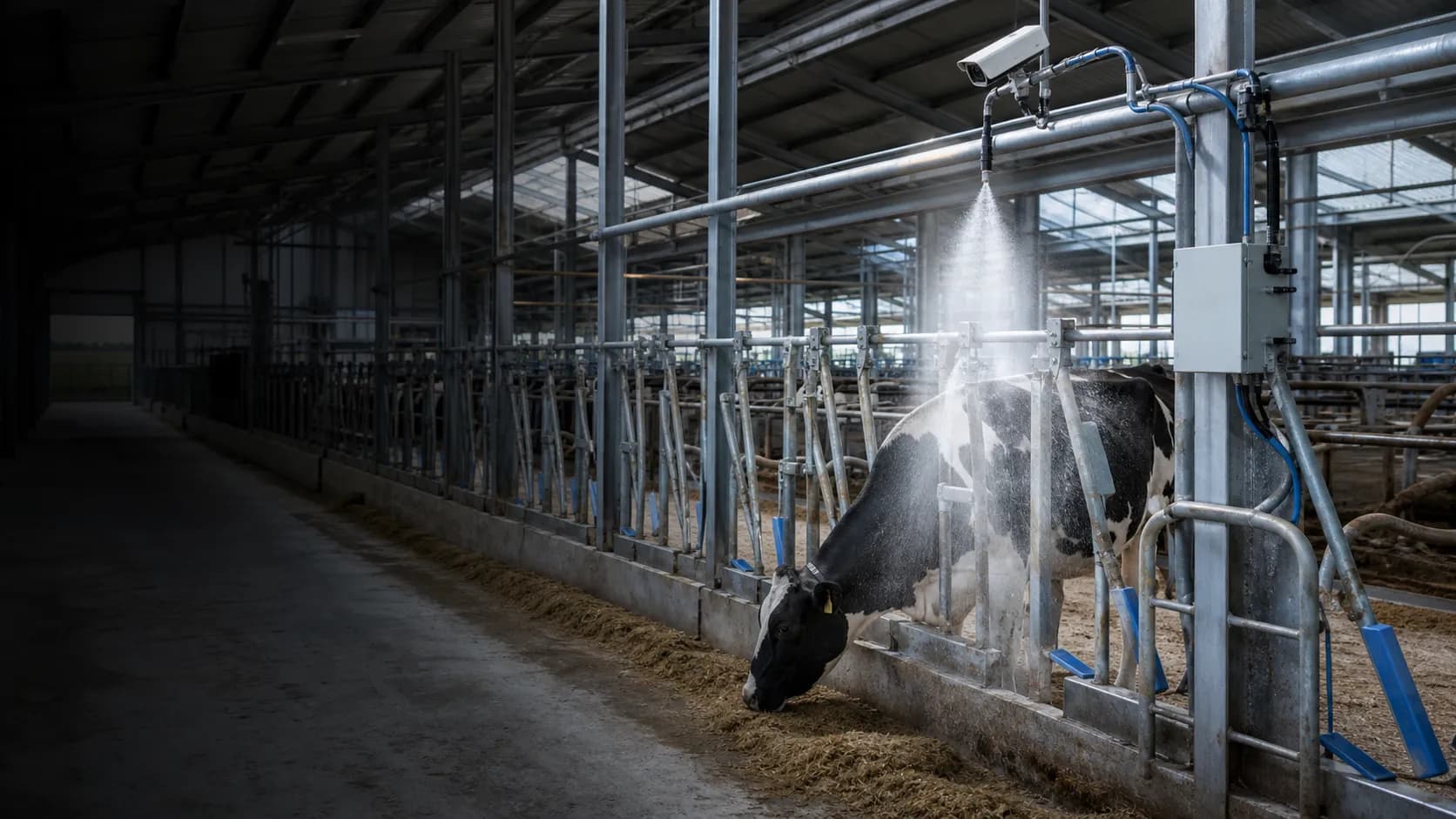
We upgraded sensor-activated dairy cooling into a vision-led decision system — so the control layer can tell a cow from a person before opening the corresponding spray valve.
Client request
The system should know whether the object in a spray position is actually a cow — and should not treat people and cattle as the same trigger.
A sensing trigger can report activity or occupancy, but it cannot reliably tell a cow from a person.
Light, dust, night operation and target orientation all affect the quality of the decision.
Without visual evidence, operators have little context for reviewing a trigger, tuning a zone or explaining an event.
Control transformation
The upgrade changes the quality of the input — not the final actuator. Classification now happens before PLC logic issues the valve command.
 COW
COWCow enters positionPresence signal detected
TriggerPerson enters positionPresence signal detected
Trigger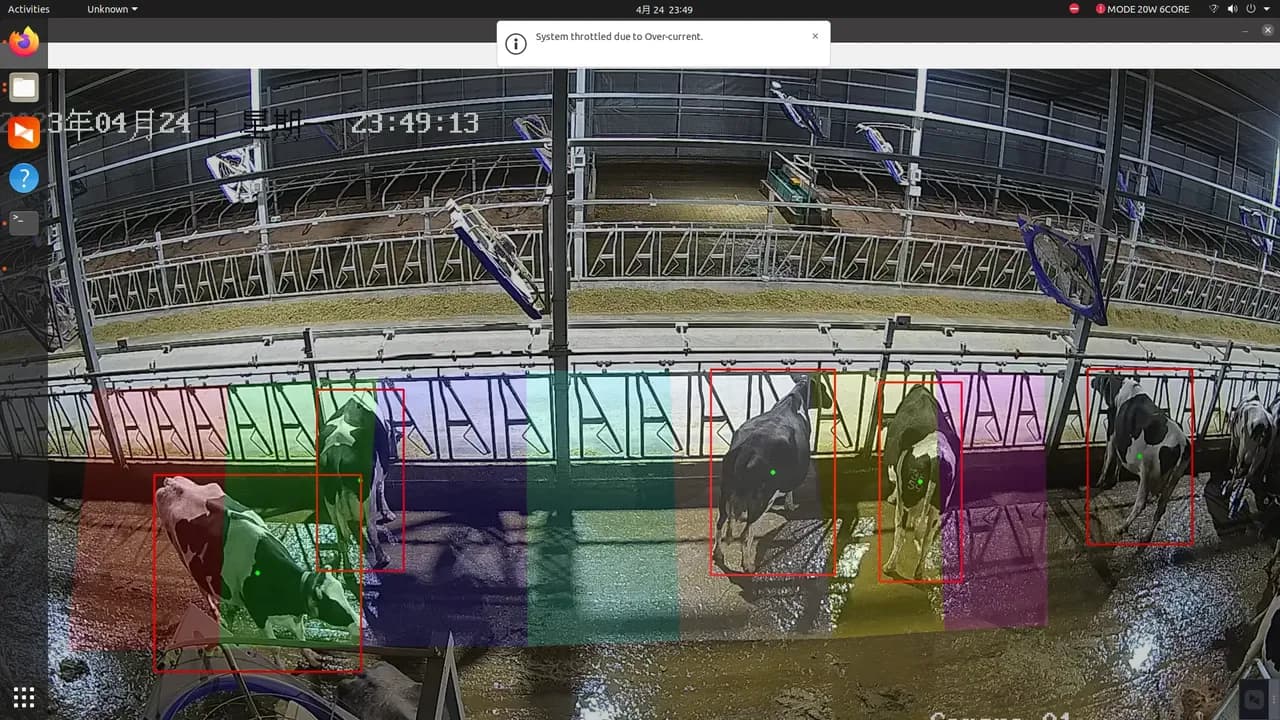 COW · 0.99ROI · ACTIVE
| Decision layer | Sensor-triggered logic | AI vision decision |
|---|---|---|
| Input signal | Presence state only | Classified target inside a defined zone |
| Cow vs. person | Same trigger for both | Classified before the valve command |
| Zone granularity | One sensing point per position | Independent ROI mapped to each spray position |
| Traceability | State bit in the controller | Image evidence, alarms and event history |
How the system works
A thin data path links visual recognition, control decisions and real equipment status — without a single oversized step dominating the workflow.
 Capture
 Decide
 Actuate
 Feedback
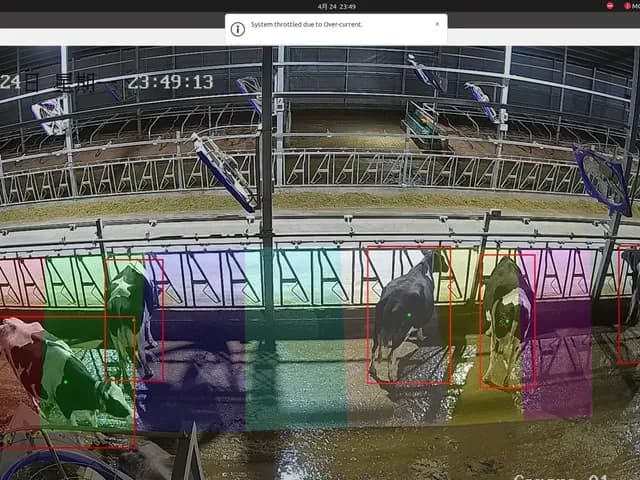
Independent colored areas define the recognition zones. Cattle are detected by the model before the corresponding zone status enters the PLC decision layer.
Engineered system
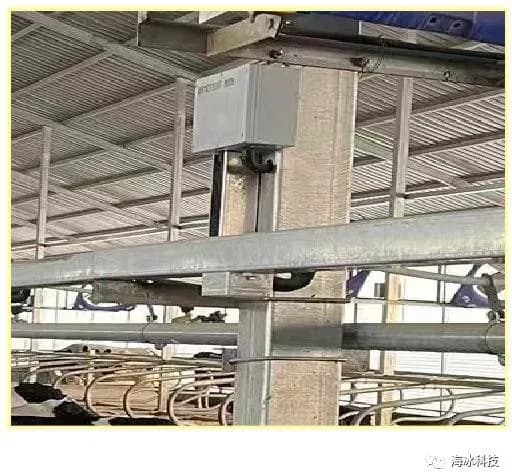
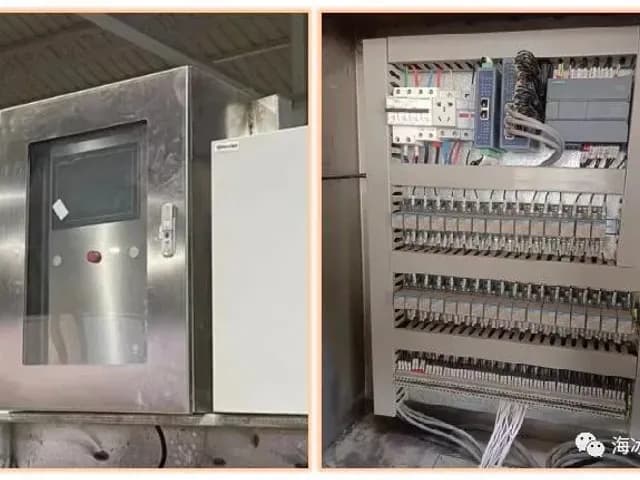
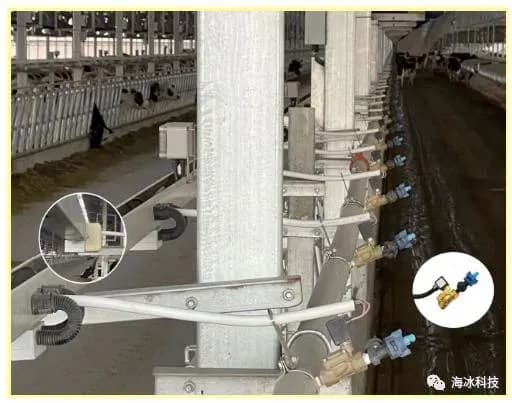
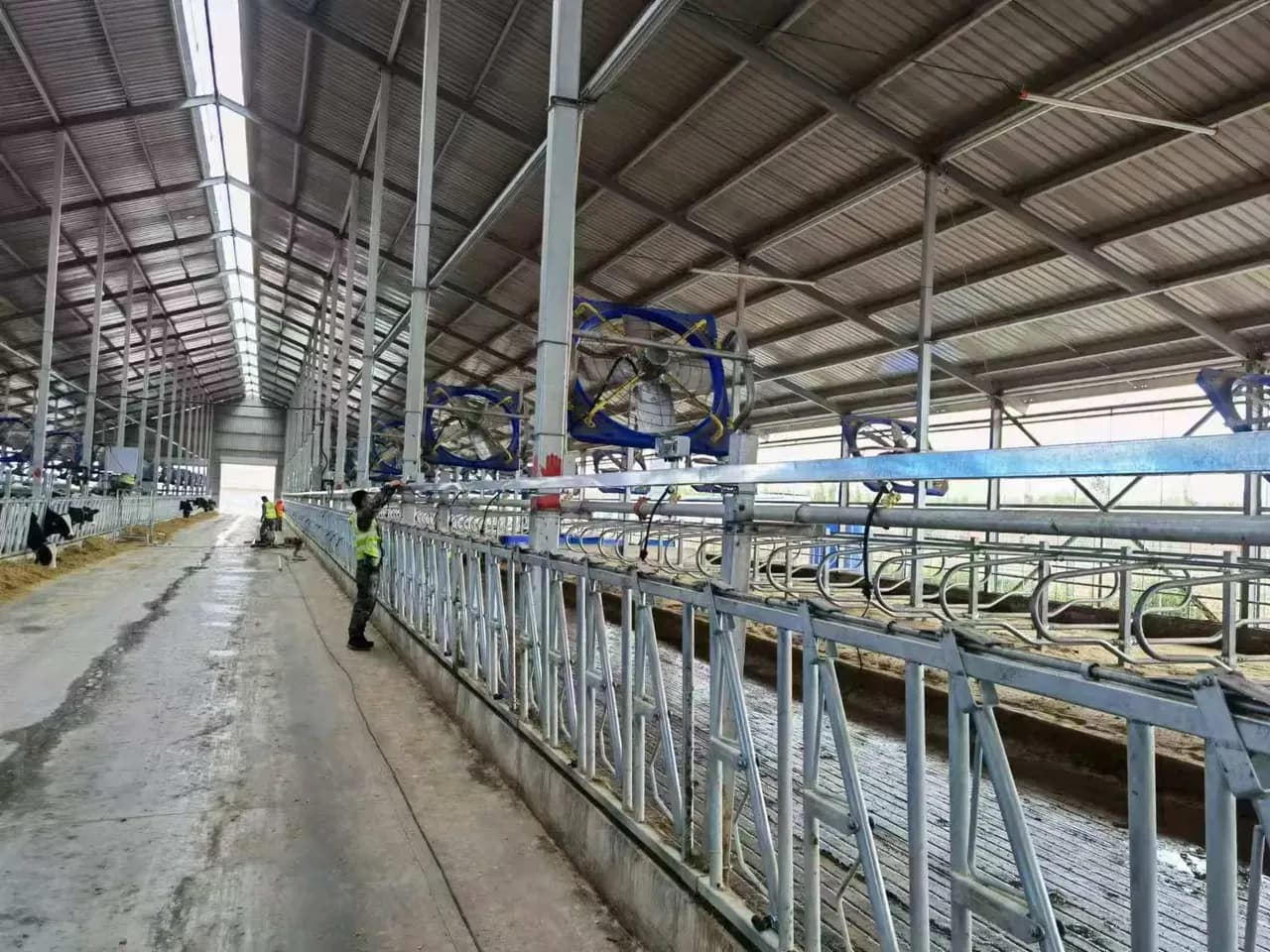
The project combines visual acquisition, edge intelligence, deterministic PLC control and operational visibility.
Live images cover the feeding line while independent ROIs map visual decisions to individual spray positions.
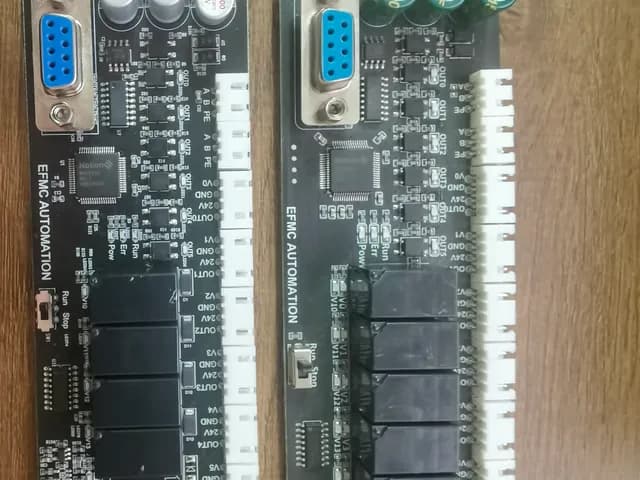
The documented system uses an NVIDIA AI computer and switches datasets to match different lighting conditions.
PLC logic performs secondary processing and commands field equipment; independent sub-control limits fault impact.
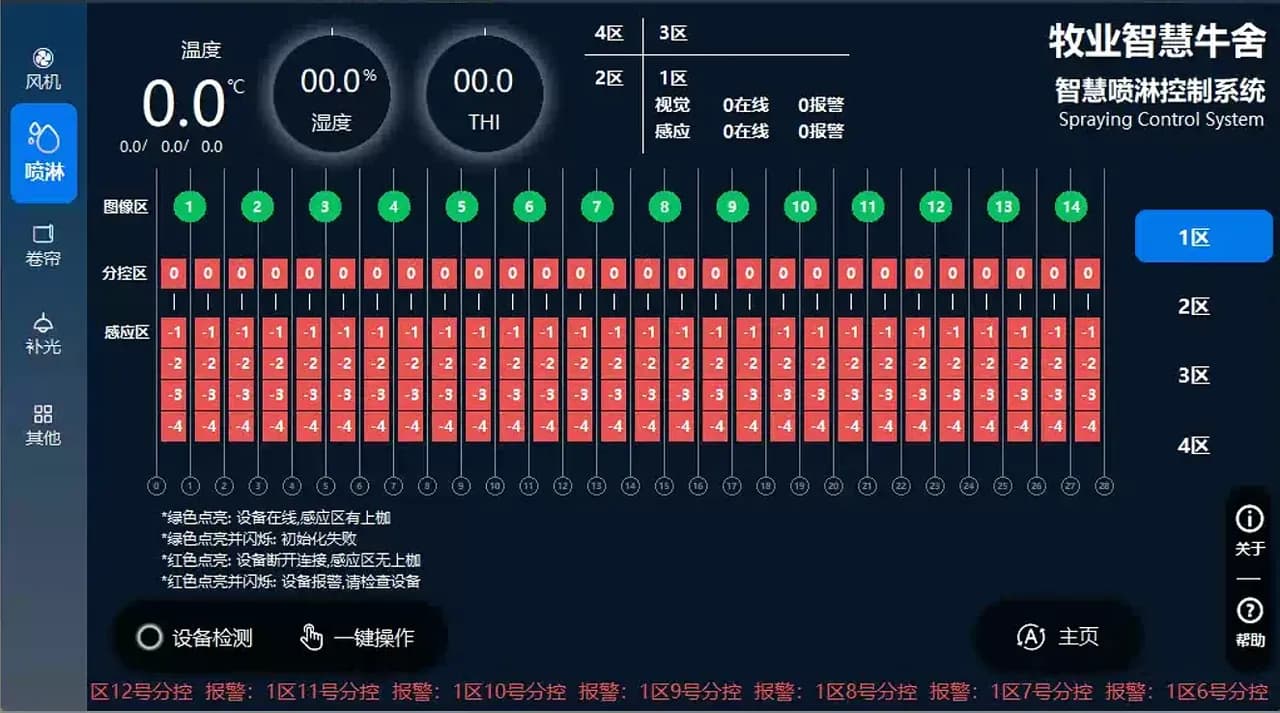
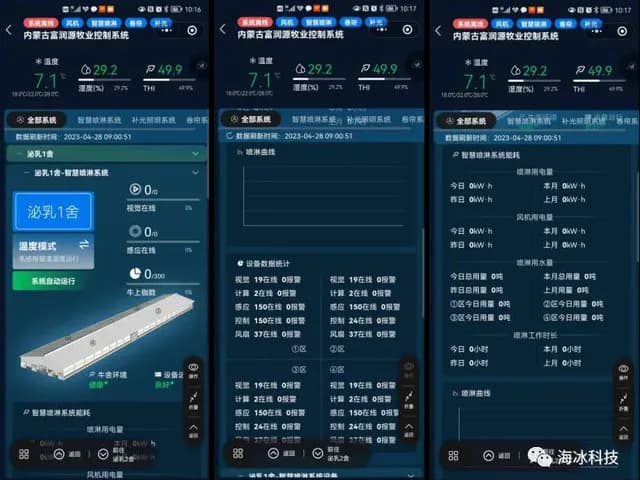
Operators can review device connectivity, zone status, alarms and system history from the visual control layer.
Field validation
The source report documents intermittent image sampling at 8-second intervals between April 5 and April 27, using two online lux sensors installed at the same position and angle.
Reported missed-detection rate 0.01%.
Reported missed-detection rate 0.03%.
Reported missed-detection rate 0.05%.
Project-specific results. Recognition performance depends on camera placement, lighting, the barn environment and the quality of the farm-specific training dataset.
Operational resilience
The documented configuration treats camera status as part of the control strategy and preserves a local fallback path.
Camera fault response documented for the upgraded configuration, compared with 5 minutes in the preceding version.
Delivery approach
Each stage is executed against this barn — its camera angles, its lighting and its existing control network.
Map cameras, feeding positions, lighting and the existing control network.
Create independent visual recognition zones for each spray position.
Build a dairy-specific dataset around environment, cattle and camera angle.
Connect AI inference, PLC sub-control, valves and cloud operations.
Check day/night recognition, timing, actuation and fault fallback.
Open visual review, parameters, alarms and history to the farm team.
Project outcome
The upgrade retained position-level control while adding target classification, visual review, day/night adaptation and operational fallback. Recognition performance depends on camera placement, lighting, the barn environment and the quality of the farm-specific training dataset. System configuration and field performance vary by barn, environment and operating requirements.
The project was not about finding a new way to open a valve. It was about making a better decision before the valve opens.
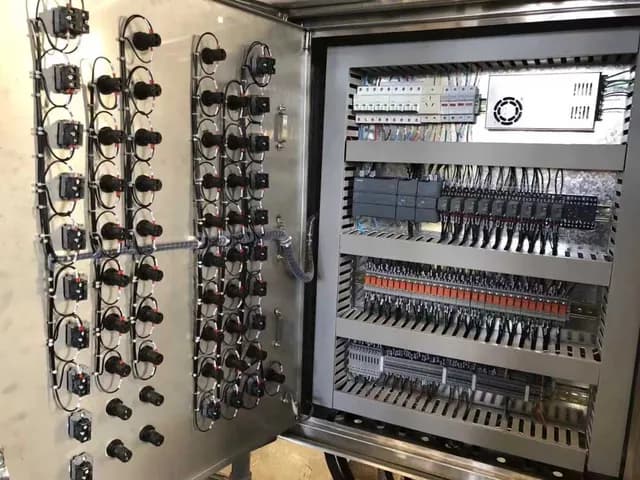
Custom-built control cabinets around the Siemens S7-1200 platform, wired, programmed and factory-tested to your process specification.
Request a Quote →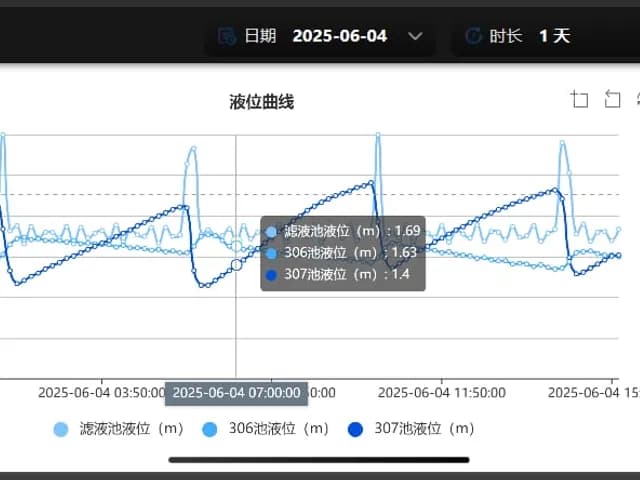
Remote monitoring of PLC-controlled plant from phone or browser, with historical data and alarm push.
Request a Quote →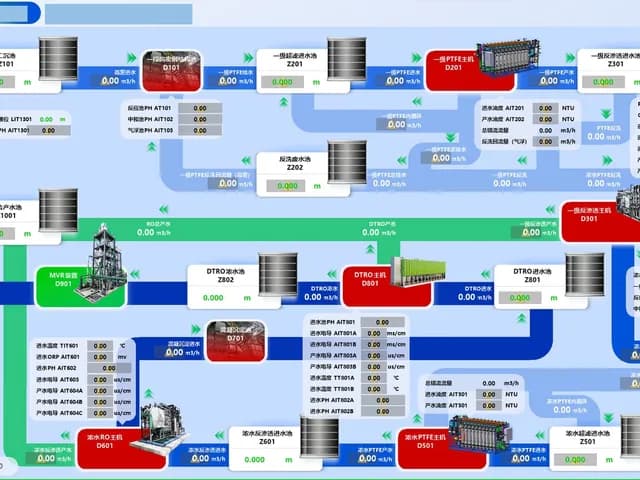
HMI and SCADA screen design and programming on WinCC and TIA Portal, delivered with source files.
Request a Quote →